





Majestic first images of the Rubin Show Universe Observatory in more detail than ever before
Astronomy fans can expand the practice before always in the impressive first images of the Vera C. Rubin Observatory

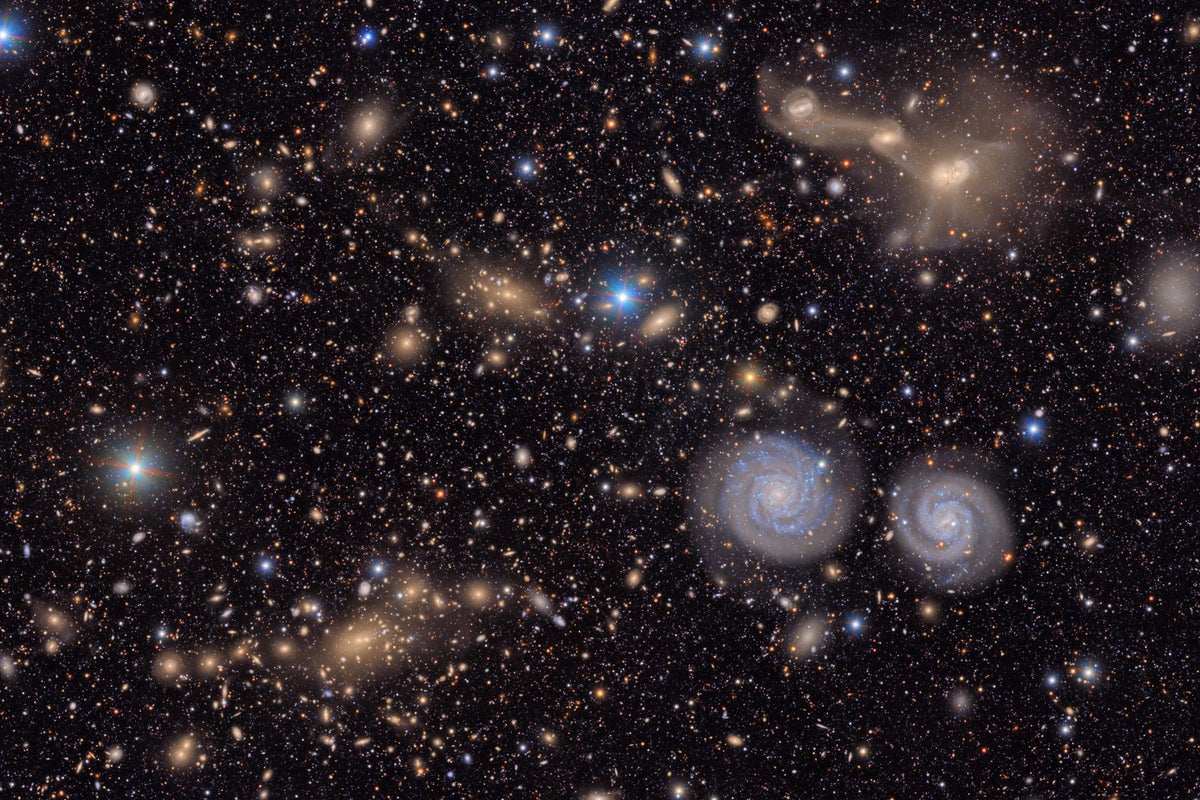
This image shows a small section of the total view of the NSF-Do Vera Observatory C. Rubin of the Virgo Cluster. Visible are two prominent spiral galaxies (down to the right), three merged galaxies (up to the right), several groups of distant galaxies, many stars in the galaxy of the Milky Way and more.
NSF-Doe Vera C. Rubin Observatory
Editor’s note (06/23/25): This story will be updated with additional images and details shortly after 11 am edt.
Welcome to a new era or amazing astronomy.
The long -awaited Observatory of Vera C. Rubin, an avant -garde perched on a mountain in Chile, is releasing his first images of the universe on June 23 and his views are as amazing as scientists expected. (The Observatory carries out a celebration event today at 11 AM EDT to reveal additional images of which you can see a live broadcast on YouTube. In addition, organizations are organizing watches open parties to the public around the world).
About support for scientific journalism
If you are enjoying this article, consider support our journalism awarded with Subscription. When buying a subscription, it is helping to guarantee the future of shocking stories about the discoveries and ideas that shape our world today.
The new images come from only 10 hours of observations, an Eyblink compared to the first real work of the telescope, the innovative Legacy Survey of Space and Time (LSST) project. In exhibition, clouds of gas are exhibited that are thousands of light years from our solar system and millions of sparkling galaxies, al-emblematics of the cosmic wealth that the observatory will finally say again.
A letter extract of a longer video made of more than 1,100 images captured by the NSF-Do Vera Observatory C. Rubin. It begins with a close -up of a spiral galaxy and then moves away to reveal around 10 million galaxies. These 10 million galaxies are approximately .05% of the approximately 20 billion Rubin Observatory galaxies will capture the duration of their legada survey of 10 years of space and time.
Credit: NSF-Doe Vera Observatory
“In many ways, it almost doesn’t matter where we look,” said Aaron Roodman, a physicist at Stanford University and leader of the LSST Chamber of the Rubin Observatory, at a previous press conference held on June 9.
“We are going to see changing objects; we are going to see objects in motion; we will have a vision of thousands and thousands of stars galaxies in any field we look at,” he said. “In a sense, we could have searched anywhere and fantastic images.”
In the end, the team decided to share several image mosaics from the Observatory that highlight its extremely broad field of vision, which can capture multiple attractive objectives in a single snapshot.

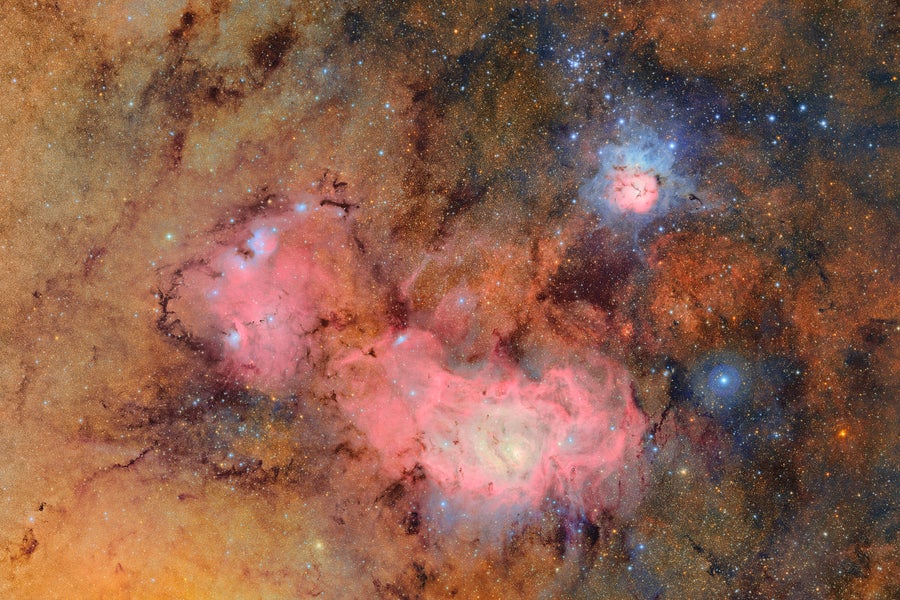
This image combines 678 tasks of images separated by the NSF-Do Vera Observatory C. Rubin in approximately seven hours of observation time. The combination of many images in this way clearly reveals weak or invisible details, such as the clouds of gas and dust that comprise the trifid nebula (up to the right) and the nebula of the lagoon, which are several thousand light.
NSF-Doe Vera C. Rubin Observatory
The view above the triffid nebula (Up to the right) and the Laguna nebula includes data from 678 individual images captured by the Rubin Observatory. Scientists stack and combine images in this way to see Party and Feinter in the universe. The Triffid nebula, also known as M20, and the nebula of the Laguna, also known as M8, are stars forming regions located several thousand light years of the earth in the Sagittarius constellation.
The observatory also captured an initial view of the Virgo cluster, a massive galaxies located in the constellation of the same name. Individual detail images (at the top and down) Show a mixture of bright stars of the Milky Way in a context of innumerable more distant galaxies. In addition, the team has released a teaser video or an impressive wide view of about 10 million galaxies that was created by combining about 1,100 image tasks by the new observatory.

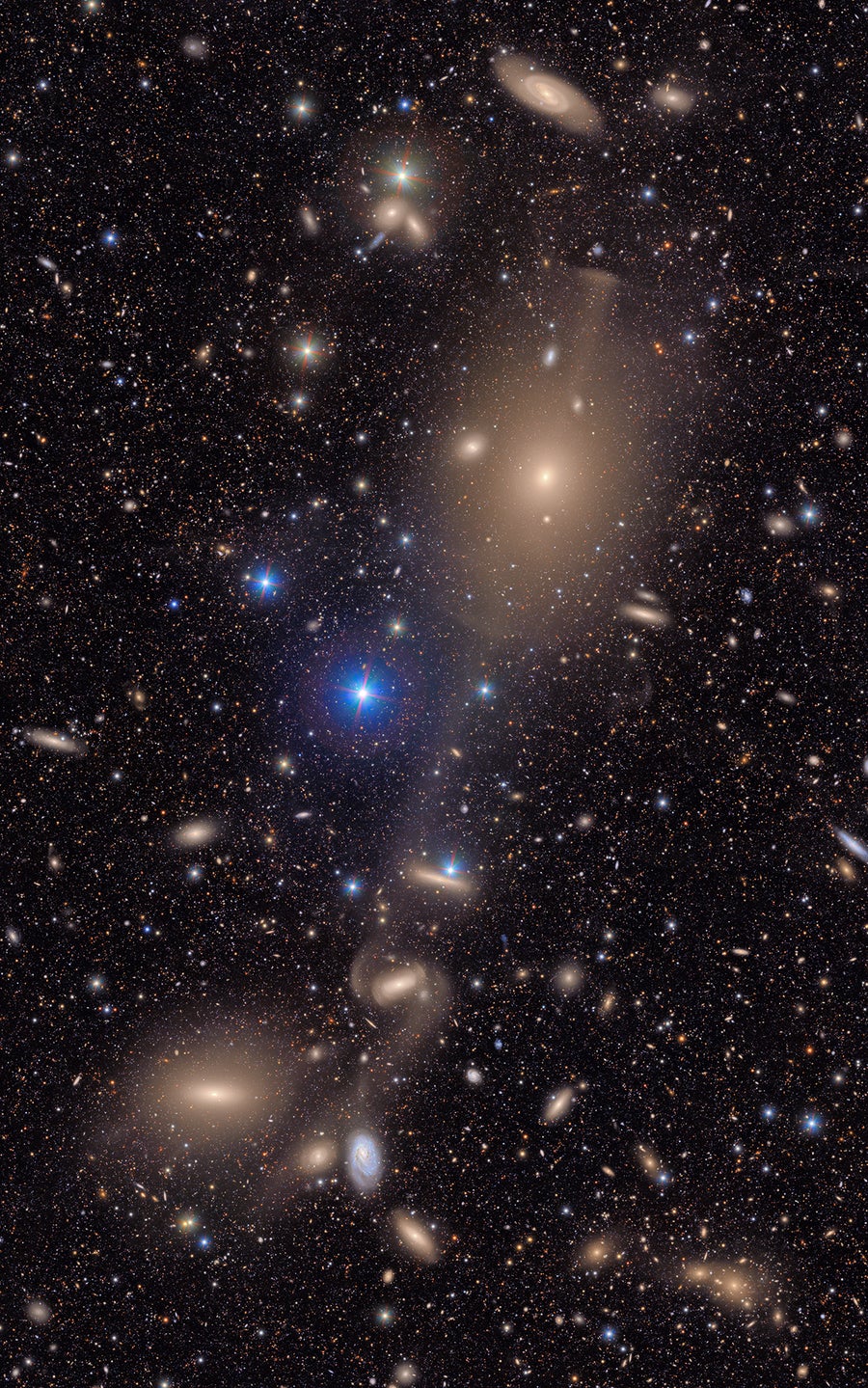
This image shows a small section of the total view of the NSF-Do Vera Observatory C. Rubin of the Virgo Cluster. Bright stars in the Galaxy of the Milky Way shine in the foreground, and many distant galaxies are in the background.
NSF-Doe Vera C. Rubin Observatory
The Rubin Observatory has promised to reveal additional images during the presentation event later today, including the full video of the mass vision of innumerable galaxies and another video that represents the more than 2,000 asteroids that the telescope already has.
These first glimpses of Rubin show the power of unprecedented discovery of the observatory. The telescope will survey the entire South sky once every three days, creating cosmos films in full color and amazing details.
“We have worked on the legs in this for so many years,” says Yusra Alsayyad, astronomer at Princeton University and associate director of Data Management of the Rubin Observatory for data management. “I can’t believe this moment has finally arrived.”
]