

A decade ago, the state of Florida stripped a teacher of her license for sexual abuse of a 16-year-old boy. Last year, she opened a private school there with ease.
Her name and photo were on her new school’s website and details of her case were easy to find with an online search.
The state also knew that a transplanted Midwesterner had been fired from her Cincinnati charter school, following felony charges related to misuse of public funds, and had been banned from teaching or running schools in Ohio. Yet Florida did not stop her from starting a private school and collecting public money.
As private schools proliferate in Florida and across the country, fueled by taxpayer dollars, states are choosing not to closely regulate who is operating them or to oversee student safety and achievement, a ProPublica investigation found.
The backgrounds of school founders and employees often simply don’t matter. In Arizona, for example, “state law prohibits our department from a role overseeing private schools,” a spokesperson for the state Department of Education told ProPublica.
In 2024, Arizona’s top education official lauded Mike Tyson, the heavyweight boxer who served time in prison for rape, for his involvement in launching a private school that bore his name, calling Tyson “a champion of education.”
Some states, including Arizona, cannot say how many private schools exist or where they operate despite spending hundreds of millions of taxpayer dollars on voucher-style programs. The federal government also does not keep a comprehensive accounting.
Help ProPublica Report on Education
Have you had trouble finding a school or using a voucher-style program? Do you have concerns about schools — public or private — in your area? Help us understand how families across the country are navigating their school options.
ProPublica analyzed data from 13 states of varying sizes that do publish private school directories and offer public funding to these types of schools, and found that at least 1,500 more are listed today than were five years ago — bringing the total to more than 9,600. The numbers provide a rare look into the growth catalyzed by friendly legislatures and government money, while public school districts are losing students and closing schools.
When public money is available, most private schools take advantage of that funding. In several states, all or nearly all students at some private schools pay tuition with public dollars. For instance, public funds subsidized 99% of all private school students in Iowa this past school year, the third year the program was available.
An average of 100 new private schools have launched in Florida each of the last five school years. West Virginia, a state with fewer school-age students than are enrolled in Chicago Public Schools, has gained about 40 new private schools.
And in the three years since Arkansas began allowing students to get about $7,000 annually toward tuition, about 120 new private schools opened. ProPublica detailed the consequences of the rapid growth and meager oversight in Arkansas in a previous story, spotlighting a school where students were subjected to menial labor and violence. The owner there was convicted of permitting child abuse, a felony. The state has said student safety is its top priority, but the school remains eligible to receive state money after a temporary stop.
Many States Across the Country Have Seen Rapid Growth in Private Schools

It has been a conservative goal for decades to diminish the role of public schools and privatize American education. A surge in private-school funding programs since the pandemic represents significant progress toward that goal. Now about 30 states have some version of a program that allows families to spend public money on private school tuition.
EdChoice, a group that advocates for these plans, estimated that more than 1.5 million students are taking advantage of them. And that number is expected to rise further as a federal tax-credit program signed into law by President Donald Trump provides the first-ever federal plan to fund K-12 private schools.
The vouchers have allowed some students to access private or religious schools they previously could not afford. But others — often students with disabilities — are finding that they’re excluded from private schools, which, unlike public schools, do not have to admit them. So they’re unable to exercise the educational freedom politicians have touted.
Even when every single student in a private school pays tuition with public money, that school still operates without the same accountability applied to public schools, where everything from finances to curriculum to student achievement is open to public inspection. The contrasting standards vex those worried for the future of public education.
“I’ve got the West Virginia codebook, which governs public education, which is over 1,300 pages long,” said Paul Hardesty, the president of the West Virginia Board of Education and a critic of the state’s permissive private school regulations.
“It’s thicker than two Sears catalogs. Rules that govern home school and private school in West Virginia — those will fit on an index card.”

So when things go badly inside the opaque world of many private schools, it can be left to parents, police, journalists and amateur sleuths to find and expose wrongdoing. With state officials lacking oversight authority in Florida, for instance, concerned parents and citizens in Citrus County began posting online about the prior sexual misconduct of the founder of Crystal River Learning Academy.
Even the police chief of the public school system weighed in. Her post included a mug shot of the now-leader of the Crystal River school in an orange jumpsuit.
She exhorted: “Please do your research!”
Barns, Go-Karts and Mike Tyson
For many, private school evokes images of elite academies, manicured campuses and plaid Catholic-school uniforms.
“But that’s not the vast majority of private schools,” said Douglas Harris, a Tulane University economist who studies voucher programs and has expressed skepticism that a free-market approach works well for schools. “They’re all over the place and sometimes in places you don’t even realize — they’re not even advertised. It’s important to understanding the potential of where this is and where it is going.”
In this recent expansion, private schools have opened in farms and barns, addiction treatment centers, co-working spaces, people’s homes and parks, ProPublica’s review of 13 states found. A West Virginia family opened a school at the family fun center they operate. It’s next to the waterpark, mini golf course and go-kart track.
Tell Us About Your Experience With School Vouchers
If your child has disabilities and you’ve used — or were unable to use — school voucher programs, we’d like to hear about your experience.
Tiny new Christian schools, often operating in Sunday school spaces in churches, are proliferating. At the same time, small fly-by-night schools have been opened by profiteers and people with problematic pasts or no educational experience.
And while the majority of American students still attend public schools and the largest share of funding goes to public districts, EdChoice estimated that last year alone, states allocated $10.6 billion to programs that can be used to pay for private schools — a 29% increase over the previous year.
One Michigan-based company that launched last year to encourage churches to tap into public funds refers to these programs in its promotional videos as “God’s new gold mine.”
In Phoenix, the Mike Tyson-branded Tyson Transformational Technologies Academy, operating in a strip mall, was opened as part of a chain of schools for foster children, unhoused or expelled students created by former MMA fighter and WWE wrestler Daniel Puder.
Tyson lent his name to the academy for $1 a year, has appeared at ceremonies for the school and given motivational speeches to students. “This visionary project reflects Tyson’s commitment to providing quality education and opportunities,” a 2024 news release for the school stated. He was described as a co-founder of the school.
Tuition is free to families: The state of Arizona paid the school $231,973 in fiscal year 2025, according to the state education department.
Puder explained in a podcast interview that his own journey from fighter to motivational speaker to private-school operator began when he and a friend were musing about Puder’s efforts to help address bullying at a local school district.
“My buddy looks at me and I’m like, ‘Dude, the turnover in public schools is crazy,’” Puder said.
“And he’s like, ‘Start a school.’ And I’m like, ‘Jamie, what are you talking about? I’m a special ed kid.’ I’m like, ‘I didn’t graduate college.’ … He’s like, ‘No, start a school.’ I’m like, ‘OK.’”
In addition to the Tyson academy, Puder now has eight schools in Florida and one in West Virginia, according to the website for ELEV8 School, the umbrella company under which the academies operate.
After a recent rebranding, the Phoenix school Tyson helped launch is now simply called ELEV8. Puder told ProPublica that Tyson is never left alone with students. ProPublica reached out to Tyson through ELEV8 and his Florida publicist but did not get a response.
In West Virginia, ELEV8’s school advertises that tuition is “completely covered” by the Hope Scholarship, the state’s Education Savings Account program that provides each family with about $5,400 a year in public funds that can be spent on tuition, tutoring or homeschooling supplies.
Puder’s schools provide tutoring, mentoring and flexible scheduling for teens who may have jobs or are parents themselves. He told ProPublica that he wants to transform lives and guide students to college, trade school or the military.
Puder has ambitious plans to expand the enterprise, with more schools and related components in real estate, school security, artificial intelligence and school health clinics. He’s sought investors in a variety of forums, including a webinar called “Discover the Investment Model Behind Our State-Funded Private Schools — with Mike Tyson.”

Up until five years ago, states provided an opportunity for only a small segment of students — such as those who have disabilities, come from low-income families or would otherwise attend poorly performing public schools — to tap into public money for private school tuition. West Virginia adopted the nation’s first program to make those funds universally available in 2021 and today, 18 states are inviting any student to partake, regardless of family income or existing private school enrollment.
Once schools are open and accepting tax funds, few states then regulate what is taught, what qualifications employees should have or what funds may be spent on. But it’s not just the oversight that private schools get to avoid. They also are free to adopt policies — such as discriminatory admissions — that public schools cannot.
Several private schools in Ohio and Virginia permit paddling as discipline even though those states outlaw corporal punishment in public schools. As a condition of being tax-exempt, nonprofit private schools must attest that they won’t discriminate based on race, color, or national or ethnic origin. But they’re free to refuse admission to students for a range of other reasons.
It’s common, for example, for both new and established religious schools to refuse to admit (or to expel) students who say they’re gay, who condone homosexuality or whose parents are gay. One school noted on its website that it is “permitted to discriminate on the basis of religion in accordance with our Statement of Faith.” Many schools decline to enroll students with disabilities. An Alabama school that opened this past fall says it will expel students who have HIV, gonorrhea or syphilis.
Advocates of private-school voucher programs argue against restrictions on how the schools operate and push back against the type of oversight enforced on public schools. They fear that any strings attached to the public money will make many private schools balk at taking it.
“You try to not take the private school system and make it the public school system. Parents are looking for an alternative. They’re looking for something that operates differently and, they hope, serves their child better,” said Patrick Wolf, who studies vouchers and similar funding models at the University of Arkansas. His research often highlights the benefits of the systems.

Earlier this year, a handful of West Virginia legislators pushed to add some “bumpers” to the program to safeguard public funds. One provision would’ve required private schools accepting public money to give a common standardized test and report results to the county superintendent, allowing more insight into the schools’ educational quality.
The proposals didn’t pass. And then legislators who had supported them were ousted in the state’s May primaries, rebuked by the pro-voucher governor and then by voters who sided with candidates the governor had backed.
A Conviction, Then a Fresh Start
The lack of private-school oversight is built straight into the law in most of the states ProPublica studied.
Florida, for example, advertises: “The Florida Department of Education does not have jurisdiction over private schools. Legislative intent not to regulate, control, approve, or accredit private educational institutions, churches, their ministries, religious instruction, freedoms, or rites, is explicit.”
As a result, the state takes few steps to protect students from private school educators with troubled pasts.
Florida Gov. Ron DeSantis has been a passionate proponent of “educational freedom” in the state, endorsing an aggressive push to catalyze the growth of private schools. But contacted for this story and asked about the state’s oversight of those schools, his office offered no comment while referring reporters to the Florida Department of Education.
The department responded to questions about the state’s record on regulation with a statement that emphasized it requires schools to conduct background screening for owners and employees who have direct contact with students.
In addition, ProPublica reached out to four leading lawmakers who were key to Florida’s 2023 bill that extended public money to all families opting for private education. None commented.
In conducting background research on private schools in Florida, ProPublica discovered that a woman named Lisa Helton running a private school in Tampa was once named Lisa Hamm — the former superintendent of Cincinnati College Preparatory Academy charter school in Ohio.

State audits alleged that Hamm misspent public funds in Ohio for years, using school funds for extravagant staff development trips, arena suites for students to attend Taylor Swift and Justin Bieber concerts and a Cirque du Soleil show, Nutrisystem weight loss meals for staff lunches, theater tickets and dry cleaning.
She and the school’s treasurer were fired in 2013 after being indicted on 26 felony counts of theft in office, unauthorized use of property, tampering with evidence and tampering with records. Hamm entered into an arrangement where she would accept conviction on three counts of unauthorized use of property while maintaining her innocence and avoiding prison.
After she was sentenced in 2014, then-Ohio Auditor Dave Yost, whose office had investigated Hamm’s spending practices, issued a statement: “This was a looting that would make even a pirate blush, with children and taxpayers as victims. I suppose walking the plank was out of the question. However, the court’s decision will prevent her from ever stealing from students again.”
The state permanently revoked her educator license. Hamm moved to Tampa, Florida, changed her name to Helton — taking a relative’s name — and tried to get a Florida educator license. The state, aware of the misconduct findings in Ohio, granted a temporary one that has since expired.
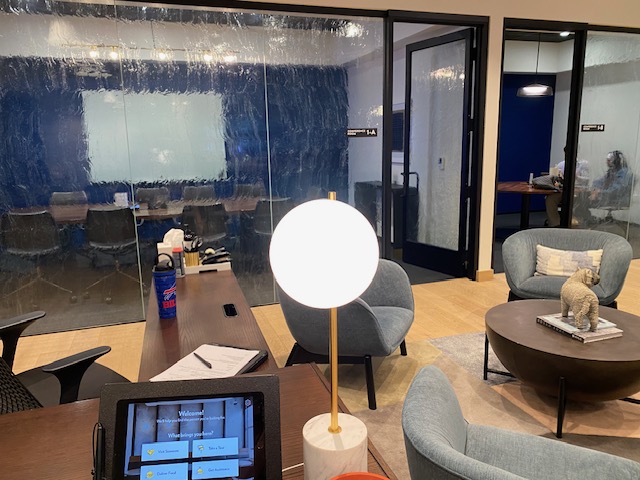
Helton founded American Education International in 2022 and registered it as a private school with Florida. She said she planned to enroll international students who want to learn English online and earn an American high school diploma. But then Florida homeschoolers tried to enroll, so Helton transformed the business to also offer in-person teaching two days a week for homeschool students out of a sleek coworking space.
She applied for her school to participate in Florida’s voucher-like program as a tutoring service and was approved.
Step Up For Students, a nonprofit that manages scholarship money distribution for the state, did not know about Helton’s trouble in Ohio, according to a spokesperson. But “we are not aware of any determination by Florida authorities that would have prohibited her from founding or operating the school” and there have been no complaints in Florida about Helton, the spokesperson said. Step Up said it follows statutory requirements in administering funds and reports “any complaints or reports of fraud” to the state education department.
Over three years, Helton’s business has collected $291,165 in public scholarship funds, Step Up said.
Helton was working on her computer on her back porch when visited by a ProPublica reporter. She said auditors in Ohio created a “false narrative” about her charter school and her actions, and that she took a plea deal only after being exhausted emotionally and financially by a drawn-out investigation. She said she acted with board approval and spent school money on kids and for staff development and incentives to retain valued personnel in a challenging inner-city environment.
“I have no background issues at all, criminally,” she said, saying her case was “erased after so many years.” There is no longer any public trace of Helton’s criminal case in the Ohio county court system; certain nonviolent cases are allowed to be sealed or expunged after a set amount of time has passed. Helton, who has a doctorate in education, said she is highly skilled and trustworthy.
“The concern is not me,” she said. “It’s people running schools with no educational background.”
The Teacher, the Teen and the Detective
About 80 miles north in Crystal River, Florida, the stir over the local educator who’d lost her license over sexual abuse began in March after a retired detective named Kat Powers posted online — at first, just to her Facebook friends. She used the pseudonym “Petera Falk,” a reference to the actor who played TV detective Columbo.
She had recognized the name of a woman who’d just opened her own private school in the fall of 2025: Tara Salute.
“I don’t do a lot of social media, it’s all about grandbabies and recipes for me,” Powers said. But she couldn’t let this go; her colleagues had handled Salute’s case, and she remembered it well. A 40-year-old vice president of the local Little League at the time, Salute in 2012 had been charged with unlawful sexual activity with a minor after a drunken night at her home with her son’s friend, a sophomore in the district where she recently had taught elementary school. After intercourse, the teenager had snapped photos of her naked body on a futon as evidence.
Salute pleaded no contest to a lesser charge of felony child abuse, the state took her educator license, and she served about a year and a half of probation. The judge “withheld” a formal conviction, a form of leniency in Florida. Salute did not respond to repeated outreach by ProPublica for comment.
When Powers — posting as Falk — came upon the Crystal River Learning Academy’s Facebook page and saw people from the community liking the page and supporting Salute, she was stunned.
“I’m like, how do people forget the background of this woman?” Powers said. “If she’d have gone to Lowe’s or Home Depot, it wouldn’t bother me. But you’re opening a school? That bothered me.”
The detective’s Facebook friends urged her to make her post public, so she did — screenshots of Salute’s court records, her mug shot and her new school photo. The Facebook post tagged news outlets, and soon the Citrus County Chronicle, the local newspaper, wrote a story.
Following the revelation, the state took action to protect state money.
The Florida Department of Education found that Crystal River had qualified for scholarship money despite not registering with the state as a private school and after Salute had uploaded someone else’s teaching certificate for her application. It called the use of the license “fraud.”
Crystal River had received a total of $150 at that point for a curriculum packet it sold. Florida’s education commissioner then revoked the school’s eligibility for state funds.
Opening a school without registering is a misdemeanor under Florida law. Asked how Salute is able to run a school in Florida despite her past and not registering, the state Education Department did not provide a direct answer. Instead, it pointed to the scholarship revocation action as evidence of its oversight.
On its website, however, Crystal River still is providing information on the Step Up scholarship for parents while inviting students to enroll for next school year. Tuition for middle and high school students will be $12,000.
In May, Crystal River’s Facebook page posted a photo of Salute posing between two teens at a local high school graduation ceremony.
“CRLA is incredibly proud to have been part of your journey,” the congratulatory message read.
Help ProPublica Report on Education
Have you had trouble finding a school or using a voucher-style program? Do you have concerns about schools — public or private — in your area? Help us understand how families across the country are navigating their school options.
The post Public Money Is Fueling an Explosion of Private Schools. States Often Don’t Care How They’re Run. appeared first on ProPublica.