


Introduction: Reinventing the Future, Again
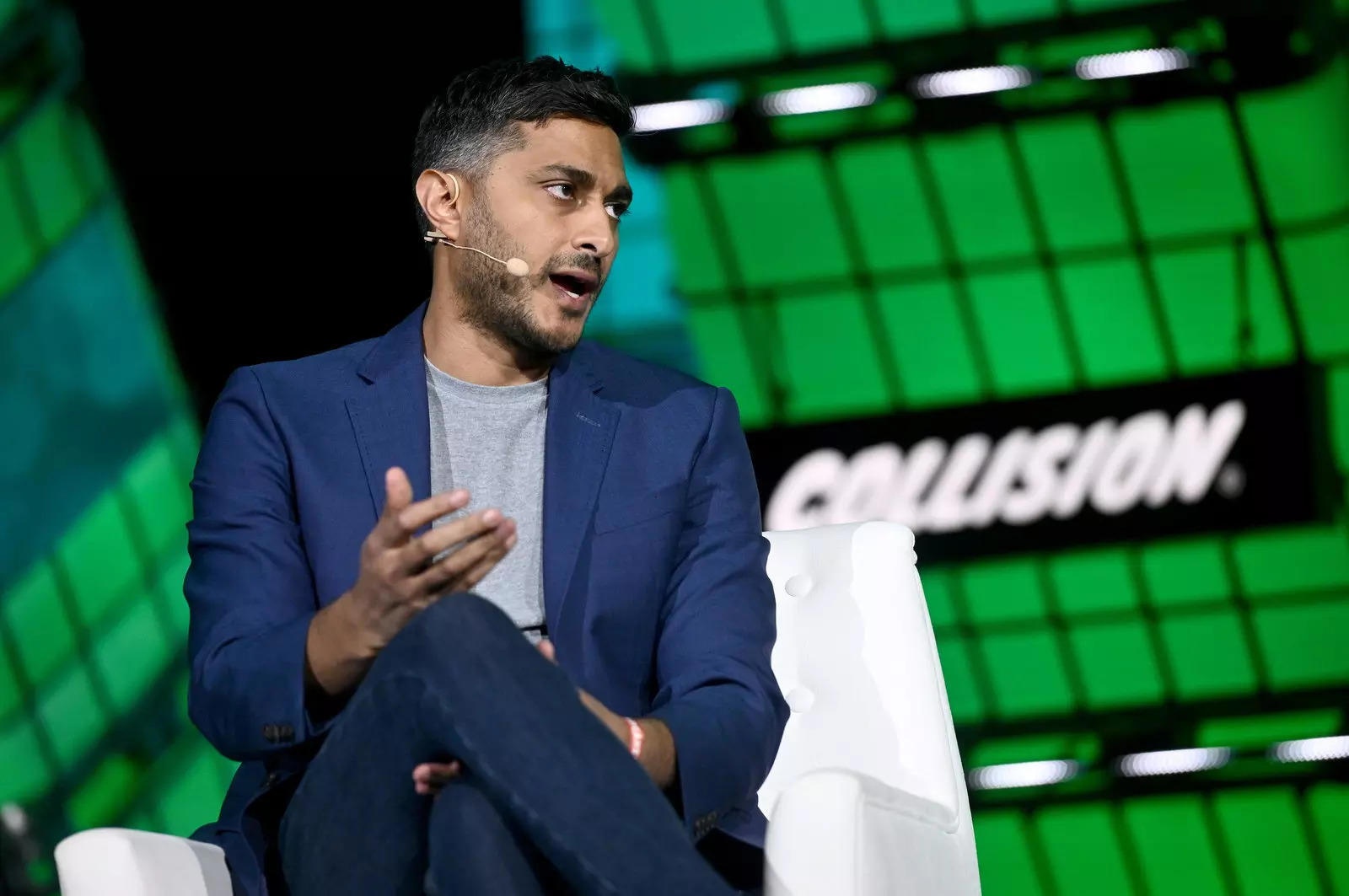
In a world where most entrepreneurs specialize narrowly, Arjun Sethi stands out as a dynamic force of innovation and reinvention. Known first for his high-profile ventures in cryptocurrency and blockchain, Sethi has now turned his gaze toward another transformational field: artificial intelligence (AI) robotics.
From decentralized finance to intelligent machines, Sethi’s journey reflects more than a shift in industry—it represents the growing demand for entrepreneurial versatility in the digital age. As he dives into the world of AI-powered robotics, Sethi is bringing the same bold vision, risk appetite, and disruptive mindset that made him a rising star in the crypto world.
But why this pivot? And what does it say about the future of innovation, talent, and the convergence of technologies?
Let’s explore how Arjun Sethi is not just jumping between trends—he’s bridging revolutions.
From Social Media to Crypto: The Rise of Arjun Sethi
Before entering the AI space, Arjun Sethi built a name for himself in social platforms and venture capital.
Early Career and Social Ventures
Sethi began his entrepreneurial career during the early 2010s, co-founding MessageMe, a popular messaging app that quickly gained traction. The startup was acquired by Yahoo in 2014, where Sethi briefly worked on its mobile strategy.
But Sethi didn’t stay long in the corporate world. His builder’s mindset pushed him to explore new frontiers, and by the mid-2010s, he had co-founded Social Capital, a venture capital firm focused on backing socially impactful startups. Later, he helped lead Tribe Capital, another VC firm known for identifying fast-growing, disruptive technologies.
Crypto Leap: Tribe Capital and Beyond
With the crypto boom in full swing, Sethi became a prominent advocate for decentralized finance (DeFi). Tribe Capital invested in major blockchain projects, crypto exchanges, and web3 infrastructure. Sethi was widely regarded as one of the early institutional backers who helped legitimize the crypto space in the eyes of mainstream investors.
He believed in the power of distributed systems to shift financial control from institutions to individuals—a belief that guided many of his investments.
However, after years of pushing the boundaries in crypto, Sethi began to see a new horizon forming—one powered not by coins and chains, but by robots and intelligent machines.
Why the Pivot to AI Robotics?
Sethi’s transition to AI robotics is not just a trend-following move—it’s a natural evolution of his vision for transformative technologies.
1. From Decentralization to Automation
In crypto, Sethi backed projects that aimed to remove intermediaries. In AI robotics, he sees a parallel opportunity: automating repetitive, labor-intensive tasks and freeing human talent for higher-value activities.
In both cases, the goal is the same—efficiency, democratization, and disruption.
2. A Maturing Crypto Market
As the crypto space began to mature and consolidate in 2023–2024, Sethi recognized that the exponential growth phase was slowing. While still a believer in web3, he saw AI as the next exponential technology—one that, when combined with robotics, could transform industries at an even larger scale.
3. Interdisciplinary Convergence
AI and robotics represent a convergence of software, hardware, and data, creating complex new systems that require both technical and strategic vision. With his deep experience in scaling startups, managing engineering teams, and funding futuristic ideas, Sethi was well-positioned to lead in this hybrid space.
Sethi’s New Venture: Robotics for the Real World
In late 2024, Arjun Sethi quietly launched a robotics startup focused on AI-powered automation. While still in stealth mode at the time of writing, sources close to the project indicate that it aims to build modular, adaptive robotic systems for use in sectors like:
- Warehousing and logistics
- Agriculture and food processing
- Manufacturing
- Healthcare and elder care
What makes the venture unique is its use of foundational AI models—the same kind of large-language or vision models that power platforms like ChatGPT or DALL·E. These models are integrated into the robotics hardware to give machines more flexible problem-solving capabilities.
Rather than relying solely on hard-coded rules or pre-scripted responses, Sethi’s robots are being designed to:
- Perceive their environments dynamically.
- Learn from human interaction.
- Collaborate with human workers rather than replace them.
From Builder to Investor and Back Again
Sethi’s move into robotics also reflects the blending of operator and investor roles. While many VCs stay on the sidelines, Sethi prefers to be hands-on.
He’s known for rolling up his sleeves—working directly with engineers, experimenting with prototypes, and driving early adoption. In his robotics venture, he has reportedly been involved in:
- Assembling the founding technical team.
- Securing early government and enterprise pilot programs.
- Working with chip manufacturers and edge-computing companies for hardware integration.
His hybrid role as both visionary and operator makes him especially effective at scaling disruptive ideas.
Entrepreneurial Versatility: What It Really Means
Sethi’s shift from crypto to AI robotics is more than career movement—it’s an example of adaptability in action, something increasingly crucial in today’s volatile tech environment.
1. Versatility as a Competitive Advantage
Entrepreneurs today must be cross-functional. The days of succeeding by mastering one domain for 20 years are fading. New technologies rise fast, cross-pollinate faster, and fade quickly if not integrated thoughtfully.
Sethi’s ability to understand crypto economics one year, AI model training the next, and robotic kinematics soon after—that’s not randomness; it’s strategic agility.
2. Pattern Recognition Across Domains
Sethi often speaks about spotting “patterns that rhyme” across industries. Whether it’s the decentralized ethos of blockchain or the autonomous decision-making in robotics, he recognizes underlying systems and adapts accordingly.
3. Network Effects
One major advantage of being a multi-industry entrepreneur is the cumulative value of networks. Sethi brings with him investors, engineers, media attention, and startup talent from the crypto space—people eager to build the next big thing alongside him.
Challenges Ahead in AI Robotics
While the opportunity in AI robotics is massive, Sethi’s path forward isn’t without challenges:
1. Hardware is Hard
Unlike pure software startups, robotics companies deal with complex supply chains, long R&D cycles, and high capital intensity. Scaling from prototype to production takes time, talent, and patience.
2. Ethical and Regulatory Concerns
AI-powered machines raise questions about data privacy, labor displacement, and safety. Governments are already moving to regulate AI—something Sethi must carefully navigate as both an innovator and public figure.
3. Talent Shortage
The race for robotics talent is heating up. Sethi will need to attract top minds in computer vision, mechatronics, and embedded systems, often competing against giants like Tesla, Google DeepMind, and Boston Dynamics.
Broader Industry Impacts: What Sethi’s Move Signals
Arjun Sethi’s shift toward AI robotics is a bellwether for a broader trend:
- VCs are increasingly becoming builders.
- Crypto-native talent is diversifying into emerging fields.
- The convergence of technologies (AI + robotics + web3) is becoming central to the next wave of innovation.
Sethi represents the next-generation entrepreneur—unafraid to pivot, unafraid to learn, and unwilling to be boxed in by one domain.
The Bigger Vision: Building Humanity-First Automation
What sets Sethi apart isn’t just his technical bets—it’s his belief that automation must be humane and inclusive.
Rather than pushing a dystopian vision where robots replace workers, he advocates for collaborative systems where robots empower workers to be more efficient and less burdened by repetitive labor.
He’s also exploring partnerships with:
- Public universities for research collaboration.
- Minority-focused incubators to ensure diverse talent is part of the robotics revolution.
- Global development agencies, aiming to use robotics for solving food insecurity and disaster relief.
This is impact-driven entrepreneurship, not just technology for profit’s sake.